
Supine Chin Tuck
Exercise Overview
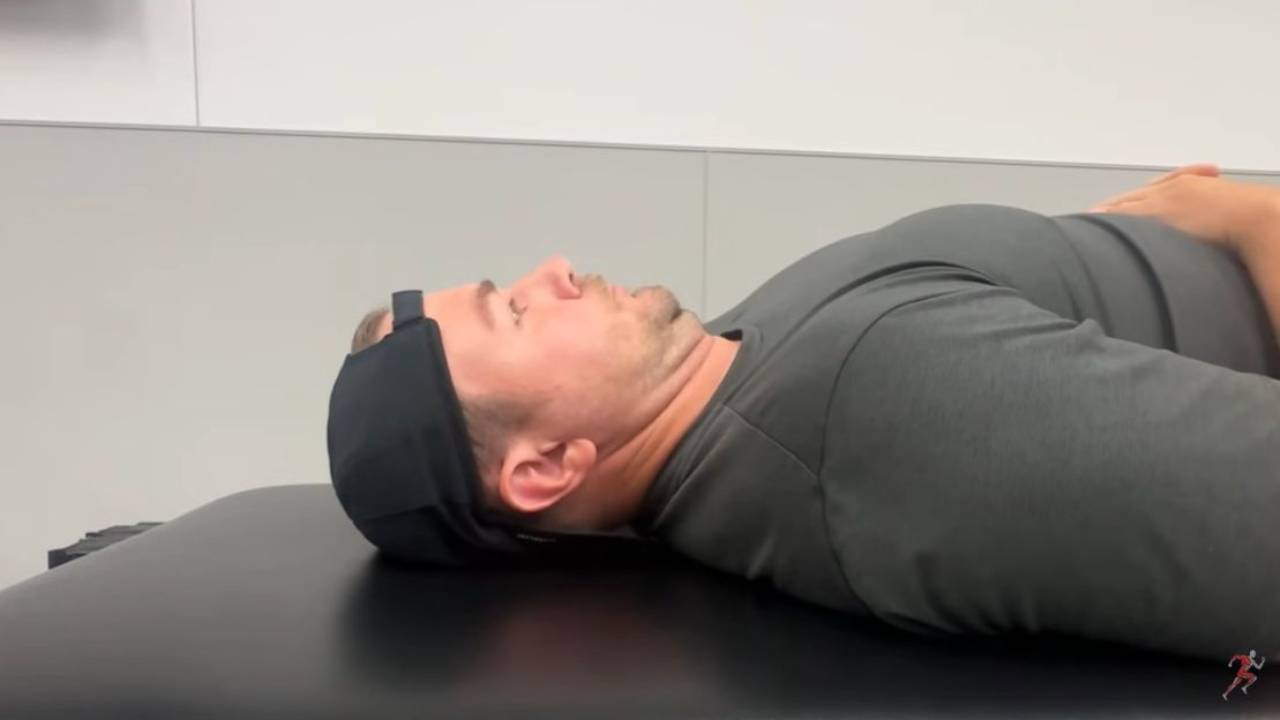
The supine chin tuck is a cervical motor-control exercise that uses gentle craniocervical flexion to improve deep neck flexor recruitment while the head remains supported.
Clinical Purpose
Used to improve cervical motor control, deep neck flexor activation, and the ability to maintain controlled head and neck positioning.
Primary Muscles
Deep cervical flexors, including the longus colli and longus capitis.
How to Perform
Lie on your back with the head supported. Keeping the head in contact with the surface, gently draw the chin backward as if creating a small “double chin.” Maintain the position briefly, then return to the starting position under control.
The movement should occur primarily through the upper cervical region without lifting the head from the surface.
Coaching Cues
- Gently draw the chin backward.
- Think about lengthening the back of the neck.
- Keep the head resting on the surface.
- Use a small, controlled movement.
- Keep the jaw relaxed.
- Avoid pushing forcefully into the table.
Common Errors
- Lifting the head from the surface.
- Excessively flexing the lower cervical spine.
- Pushing the head forcefully backward.
- Tensing the jaw.
- Using excessive superficial neck-muscle activity.
- Performing too large of a movement.
Common Clinical Uses
Cervical rehabilitation, neck pain management, deep neck flexor retraining, postural control, and progression toward more demanding cervical stabilization exercises.
Programming
2–4 sets of 8–15 repetitions.
A brief 2–5 second hold may be used with each repetition when appropriate. Emphasize movement quality rather than maximal contraction intensity.
Regression
Decrease the amount of cervical motion, use tactile cueing beneath the head or neck, or perform shorter repetitions with additional rest.
Progression
Increase hold duration, progress to a chin tuck with head lift, or add controlled cervical rotation or lateral-flexion challenges while maintaining the chin-tuck position.
Equipment Needed
Bodyweight
Rehab Phase
Early
PRO+ Clinical Pearl
The chin tuck should be a small craniocervical movement, not a forceful retraction of the entire head. If the sternocleidomastoid and superficial cervical flexors dominate the exercise, reduce the effort and restore a smaller, more controlled motion.
