
Split Squat
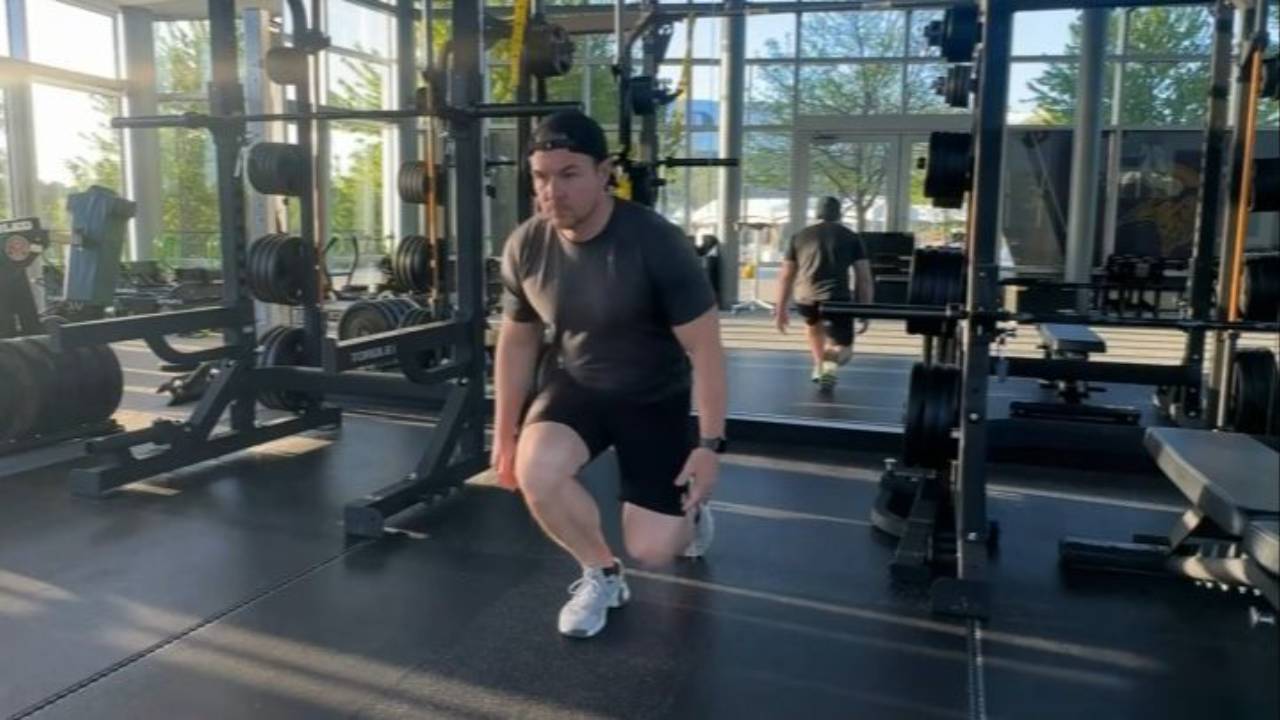
Exercise Overview
The Split Squat is a foundational lower-extremity strengthening exercise performed in a stationary, staggered stance. Unlike a forward or reverse lunge, the feet remain in place throughout each repetition.
The exercise develops quadriceps and gluteal strength while challenging unilateral loading tolerance, postural control, and lower-extremity coordination.
Clinical Purpose
Develop lower-extremity strength and controlled knee and hip flexion under load. The stationary position allows clinicians to adjust depth, stance length, external support, and loading based on the individual's capacity.
Primary Muscles
-
Quadriceps femoris
-
Gluteus maximus
-
Gluteus medius (frontal-plane stabilization)
-
Trunk musculature (postural stabilization)
How to Perform
-
Stand with one foot forward and the other foot behind in a staggered stance.
-
Position the feet approximately hip-width apart for stability.
-
Lower the body by bending both knees while maintaining a controlled trunk position.
-
Allow the rear knee to move toward the floor without requiring contact.
-
Press through the front foot to return to the starting position.
-
Complete the prescribed repetitions before switching legs.
Coaching Cues
-
"Lower straight down between your feet."
-
"Keep your front foot planted."
-
"Control the descent."
-
"Keep your pelvis level."
-
"Drive through the front leg as you stand."
Common Errors
-
Excessively narrow stance resulting in loss of balance.
-
Uncontrolled forward or backward trunk movement.
-
Loss of front-foot contact or stability.
-
Rapid descent without eccentric control.
-
Knee movement that the individual cannot adequately control.
Common Clinical Uses
-
Progressive quadriceps and gluteal strengthening.
-
Lower-extremity rehabilitation following knee or hip injury.
-
Preparation for lunging, step-ups, and unilateral loading tasks.
-
Identification and training of side-to-side strength and control differences.
Programming
Strength: 2–4 sets of 6–12 repetitions per side.
Motor control: 2–3 sets of 8–10 slow repetitions per side.
Suggested tempo: 2–3 seconds lowering, controlled return.
Adjust resistance, range of motion, and total volume according to symptoms, technique, and fatigue.
Regression
-
Supported split squat using a wall or stable object.
-
Reduced depth split squat.
-
Split Squat Isometric Hold at a tolerable knee angle.
Progression
-
Dumbbell Split Squat.
-
Front-Foot Elevated Split Squat.
-
Rear-Foot Elevated Split Squat.
-
Increased range of motion or slower eccentric loading.
Equipment Needed
Bodyweight. Optional dumbbells or external support.
Rehab Phase
Mid-stage rehabilitation, depending on strength, movement tolerance, and clinical presentation.
PRO+ Clinical Pearl
The split squat is an excellent entry point for unilateral-biased lower-extremity loading because the stationary foot position minimizes the additional deceleration and coordination demands associated with stepping lunges.
Adjusting stance length, trunk position, and range of motion can alter relative loading demands at the hip and knee. Avoid prescribing one universal technique for every athlete.
