Snap Down
Exercise Overview
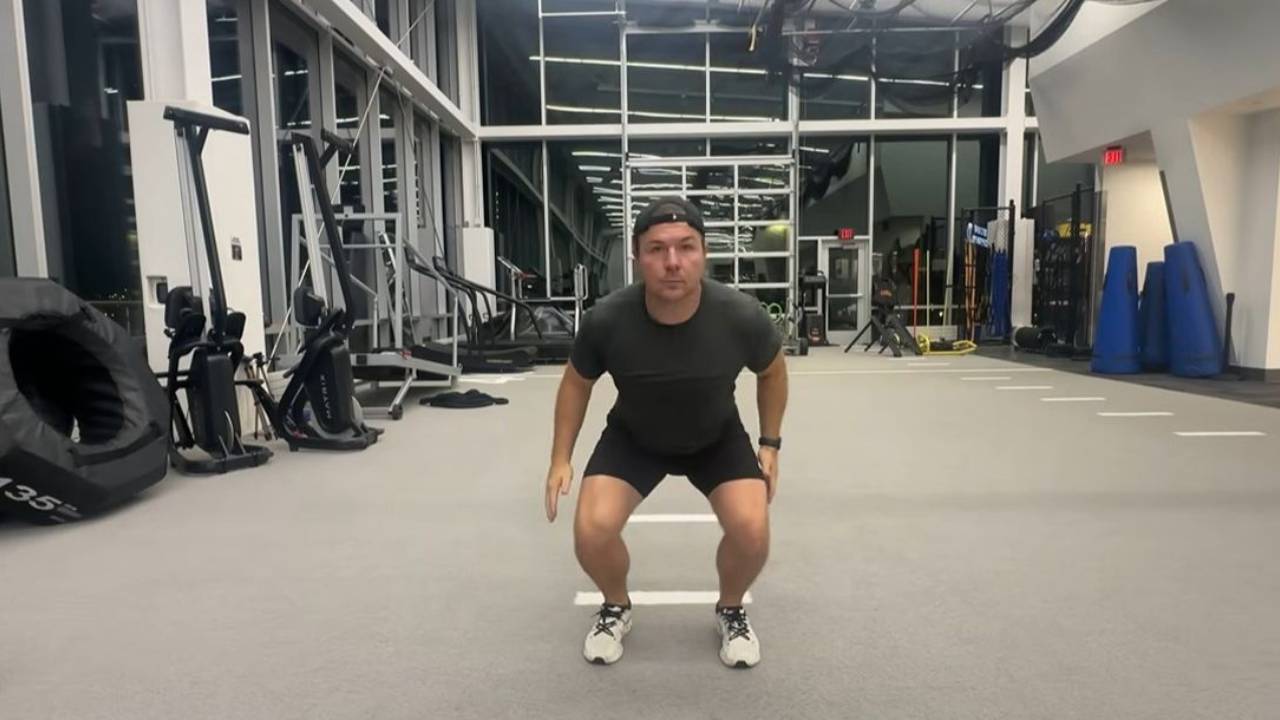
The snap down teaches an athlete to rapidly transition from a tall position into a controlled athletic landing position.
Clinical Purpose
The exercise develops foundational force-absorption mechanics before introducing more demanding jumping, landing, and reactive plyometric tasks.
Primary Muscles
Quadriceps, gluteus maximus, hamstrings, gastrocnemius, and soleus.
How to Perform
Begin standing tall. Rise slightly onto the toes while reaching upward. Rapidly transition downward into an athletic position by flexing through the hips, knees, and ankles. Hold the final position under control.
Coaching Cues
- Get down quickly.
- Land quietly.
- Sit into the hips.
- Keep the knees aligned over the feet.
- Own the final position.
Common Errors
- Stiff-legged landing.
- Dynamic knee valgus.
- Excessive forward trunk collapse.
- Poor foot position.
- Inability to stabilize after the landing.
Common Clinical Uses
ACL rehabilitation, landing retraining, plyometric preparation, deceleration training, and return-to-sport progression.
Programming
2–4 sets of 4–8 repetitions.
Regression
Controlled squat-to-athletic-position drill.
Progression
Snap Down to Single-Leg Stick or Snap Down to Vertical Jump.
Equipment Needed
Bodyweight.
Rehab Phase
Mid-Late.
PRO+ Clinical Pearl
Before increasing jump height or reactive demand, make sure the athlete can rapidly accept force and consistently control the resulting position.
