Single Leg Soleus Raise
Exercise Overview
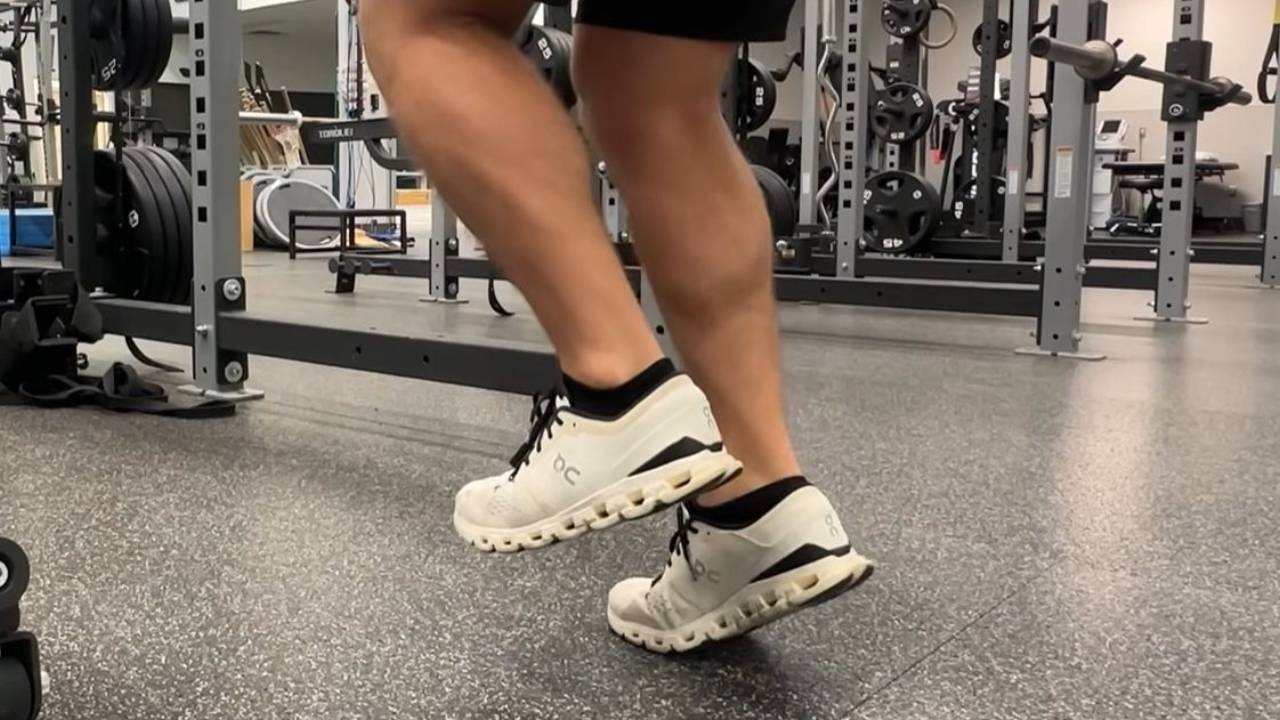
The single-leg soleus raise is a bent-knee calf strengthening exercise that emphasizes the soleus while challenging unilateral ankle plantarflexion strength and control.
Clinical Purpose
Used to progressively develop soleus strength and calf capacity with the knee flexed, particularly for athletes returning to walking, running, jumping, and higher-load lower-extremity activity.
Primary Muscles
Soleus
Secondary contribution from the gastrocnemius and other ankle plantarflexors.
How to Perform
Stand on one leg with the knee maintained in a flexed position. Keep the foot firmly supported and raise the heel as high as possible while maintaining the knee angle. Pause briefly at the top, then lower the heel under control to the starting position.
Coaching Cues
- Keep the knee bent throughout the repetition.
- Drive through the forefoot and raise the heel vertically.
- Maintain pressure through the great toe and forefoot.
- Avoid allowing the knee to straighten as you rise.
- Control the lowering phase.
Common Errors
- Straightening the knee during the heel raise.
- Using momentum to reach the top.
- Rolling toward the lateral border of the foot.
- Losing available heel-rise height as fatigue develops.
- Performing the movement too quickly to maintain control.
Common Clinical Uses
Achilles rehabilitation, ankle rehabilitation, calf strengthening, return-to-running preparation, restoration of plantarflexor capacity, and lower-extremity performance training.
Programming
3–4 sets of 8–20 repetitions per side.
Repetition range, external load, tempo, and range of motion can be adjusted based on the athlete’s current strength and endurance goals.
Regression
Perform the exercise bilaterally, use external support, decrease range of motion, or reduce the amount of knee flexion.
Progression
Increase external resistance, increase range of motion from an elevated surface, add slower eccentric loading, increase repetition volume, or progress toward higher-velocity plantarflexion tasks.
Equipment Needed
Bodyweight; external support may be used for balance.
Rehab Phase
Mid
PRO+ Clinical Pearl
Maintaining knee flexion is the key programming distinction. A bent-knee calf raise reduces the contribution of the gastrocnemius relative to a straight-knee heel raise and increases the emphasis on soleus capacity. Avoid calling the exercise a true “soleus isolation” exercise—the gastrocnemius and other plantarflexors still contribute.
