Single-Leg Balance
Exercise Overview
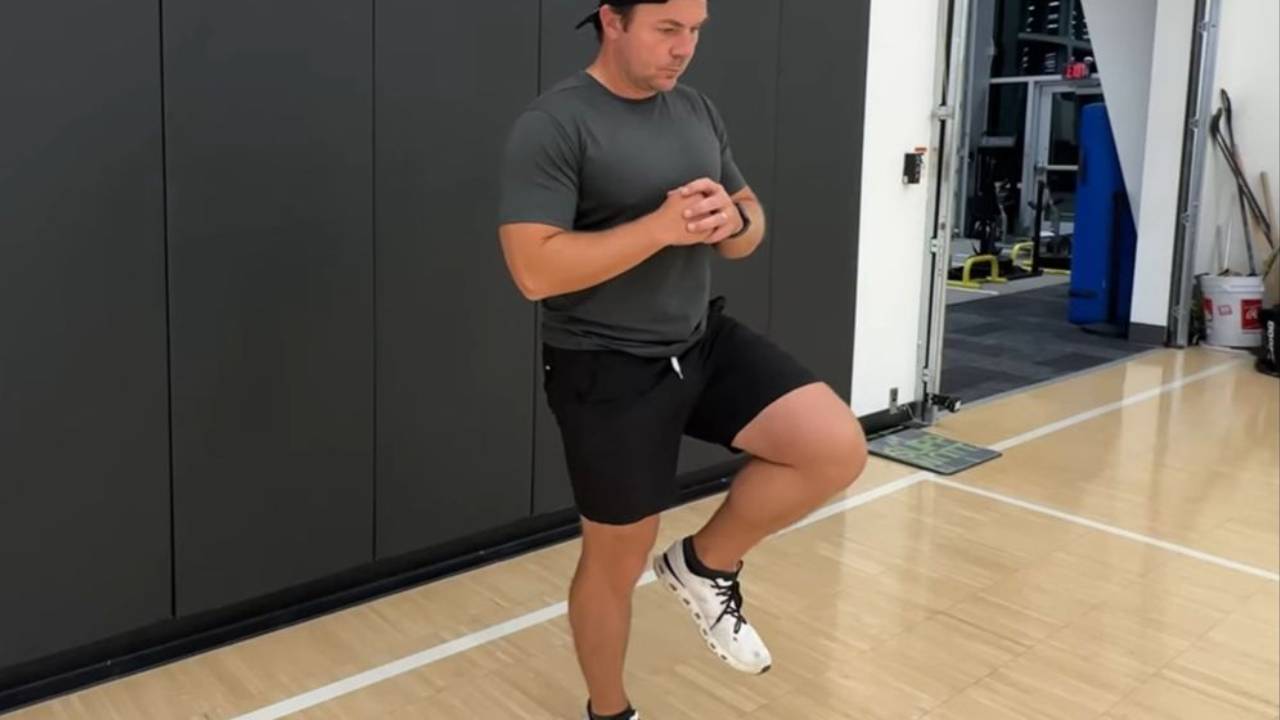
Single-leg balance is a foundational unilateral exercise used to challenge postural control, proprioception, and lower-extremity stability while maintaining a single-leg stance.
Clinical Purpose
Used to improve neuromuscular control and postural stability of the ankle and lower extremity while developing the athlete’s ability to maintain control over a reduced base of support.
Primary Muscles
Ankle stabilizers, calf musculature, gluteus medius, and other hip stabilizers
How to Perform
Stand on one leg with the stance knee slightly flexed. Maintain an upright posture and keep the pelvis level while holding the single-leg position. Keep the foot in contact with the floor and control movement of the ankle, knee, hip, and trunk throughout the hold.
Coaching Cues
- Maintain a stable tripod through the foot.
- Keep the knee softly bent.
- Keep the pelvis level.
- Stay tall through the trunk.
- Minimize excessive ankle, knee, and trunk movement.
- Maintain control rather than simply trying to avoid touching down.
Common Errors
- Excessive foot or ankle collapse.
- Allowing the knee to fall inward.
- Pelvic drop on the non-stance side.
- Excessive trunk lean.
- Locking the stance knee.
- Using repeated foot taps rather than maintaining the position.
Common Clinical Uses
Ankle rehabilitation, lower-extremity proprioceptive training, knee rehabilitation, balance retraining, and preparation for higher-level unilateral and return-to-sport exercises.
Programming
2–4 sets of 20–60 seconds per side.
Duration and difficulty can be modified based on balance quality, fatigue, surface, visual input, and the athlete’s rehabilitation stage.
Regression
Use fingertip support, shorten the hold duration, widen the available support strategy, or perform near a stable surface for assistance.
Progression
Increase hold duration, reduce visual input, add head or upper-extremity movement, introduce an unstable surface, add an external task, or progress toward dynamic single-leg balance activities.
Equipment Needed
Bodyweight
Rehab Phase
Early
PRO+ Clinical Pearl
Do not judge single-leg balance only by whether the athlete can remain upright. Watch the quality of the strategy at the foot, knee, hip, pelvis, and trunk. Excessive compensatory movement can reveal deficits even when the athlete successfully completes the prescribed hold.
