
Nordic Hamstring Curl
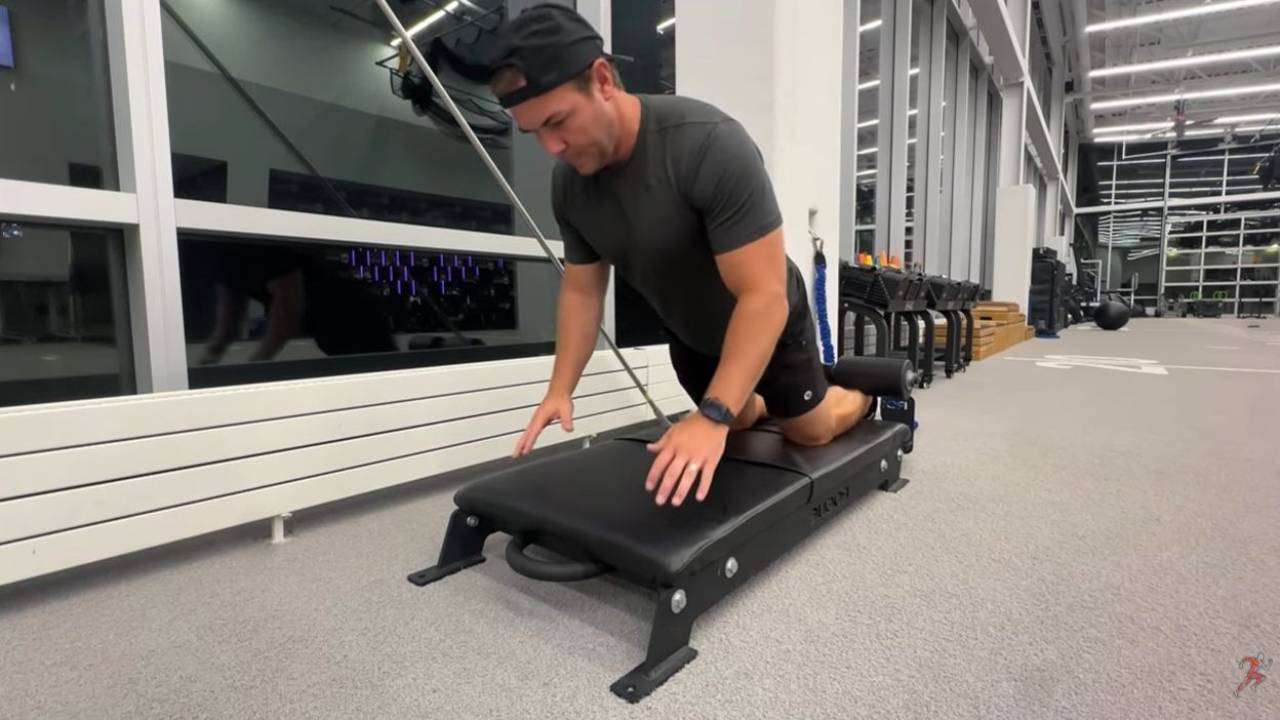
Exercise Overview
The Nordic hamstring curl is an advanced knee-flexor strengthening exercise that places a high demand on the hamstring musculature. It is commonly incorporated into athletic strength programs and later-stage rehabilitation to develop eccentric hamstring capacity and prepare athletes for higher-speed activities such as running and sprinting.
Clinical Purpose
Use the Nordic hamstring curl to develop:
- Hamstring strength
- Eccentric knee-flexor capacity
- Posterior-chain loading tolerance
- Late-stage athletic strength
- Preparation for running, sprinting, and return to sport
Primary Muscles
Primary: Hamstrings
- Biceps femoris
- Semitendinosus
- Semimembranosus
The trunk, gluteal musculature, and other lower-extremity muscles contribute to maintaining body position throughout the movement.
How to Perform
- Kneel on a padded surface with the ankles securely anchored.
- Maintain a relatively straight line from the knees through the trunk.
- Slowly lower the body forward by controlling the movement with the hamstrings.
- Maintain control for as much range as possible.
- Use the hands to assist at the bottom if necessary, then return to the starting position.
Key Coaching Cues
- Keep the hips extended.
- Avoid sitting the hips backward.
- Maintain a controlled trunk position.
- Lower slowly rather than simply falling forward.
- Use the hamstrings to resist the descent.
- Control as much range as you can.
Common Errors
- Excessive hip flexion
- Losing trunk control
- Dropping rapidly toward the floor
- Using more range than the athlete can control
- Insufficient padding or poor ankle stabilization
- Progressing load or volume too quickly
Common Clinical Uses
The Nordic hamstring curl may be incorporated into programs addressing:
- Hamstring strength deficits
- Hamstring strain rehabilitation
- Hamstring injury risk reduction programs
- Running and sprint preparation
- Field and court sport preparation
- Late-stage return-to-sport rehabilitation
General Programming
For strength-focused programming, clinicians may begin with a low volume of controlled repetitions and progress based on athlete capacity and response.
Example starting range:
2–3 sets of 4–6 controlled repetitions.
Volume, range of motion, assistance, tempo, and external resistance should be individualized based on the athlete and stage of rehabilitation.
Regression
Band-Assisted Nordic Hamstring Curl
Use external assistance to reduce the demand and allow the athlete to control a greater portion of the range of motion.
Other regression:
Partial-Range Nordic
Only lower through the range the athlete can actively control.
Progression
Potential progressions include:
- Greater controlled range of motion
- Slower eccentric tempo
- Reduced assistance
- Full-range Nordic
- External loading
Equipment Needed
- Knee pad or padded surface
- Stable ankle anchor
Optional:
- Resistance band for assistance
- External resistance for advanced progression
Rehab Phase
- Mid to Late Rehabilitation / Return-to-Sport Preparation
- Appropriate timing depends on diagnosis, tissue status, strength capacity, symptoms, and individual rehabilitation goals.
Related Exercises
- Hamstring Walkout
- Physioball Hamstring Curl
- Single-Leg Dumbbell RDL
- Romanian Deadlift
- Slider Hamstring Curl
