
Lesser Toe Extension
Exercise Overview
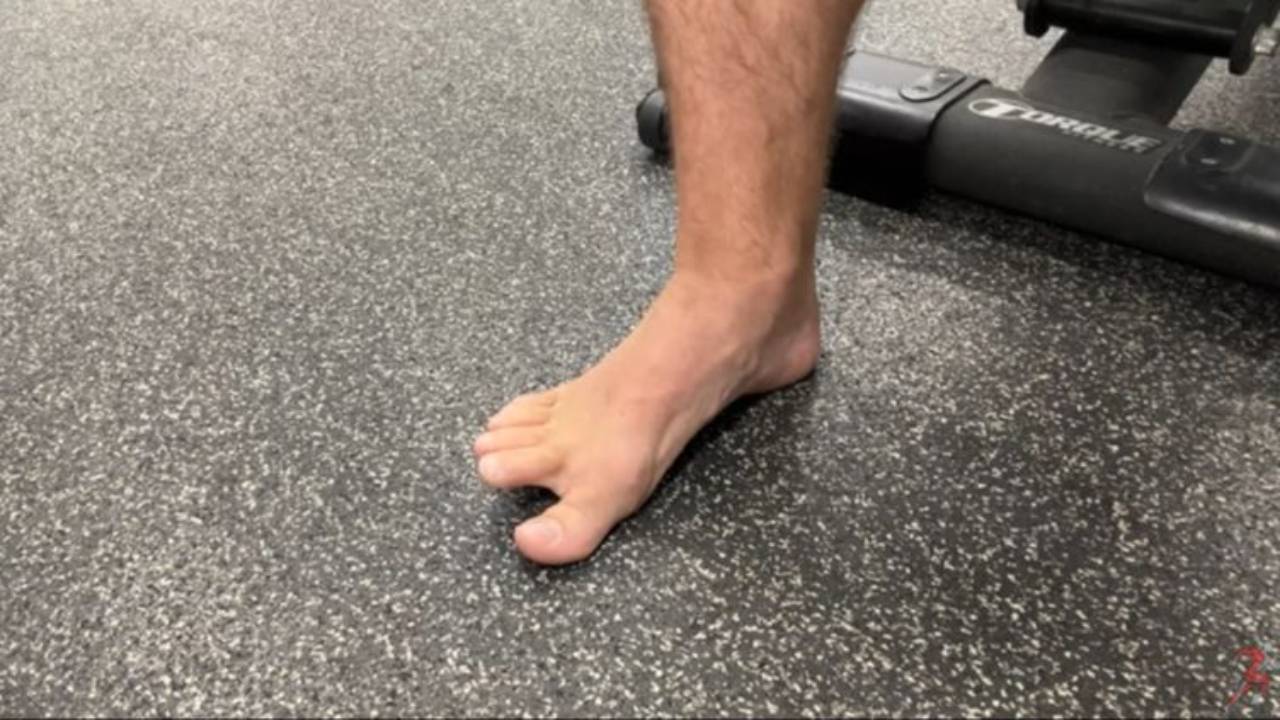
Lesser toe extension is an intrinsic foot motor-control exercise in which digits 2–5 are lifted from the floor while the great toe remains in contact with the ground.
Clinical Purpose
Used to improve independent toe control, intrinsic foot muscle function, and neuromuscular coordination of the forefoot.
Primary Muscles
Intrinsic foot musculature and toe extensors.
The exercise also challenges coordinated control between the great toe and lesser toes.
How to Perform
Begin seated or standing with the foot flat on the floor.
Keep the great toe firmly in contact with the ground while lifting the second through fifth toes away from the floor.
Pause briefly at the top, then lower the lesser toes under control.
Coaching Cues
- Keep the great toe down.
- Lift only the lesser toes.
- Keep the heel and forefoot relaxed against the floor.
- Avoid curling the toes.
- Use a slow, controlled movement.
- Focus on toe separation rather than maximal height.
Common Errors
- Lifting the great toe with the lesser toes.
- Curling rather than extending the toes.
- Excessive ankle movement.
- Rolling the foot toward the inside or outside.
- Using excessive tension through the entire lower leg.
- Moving too quickly to maintain independent toe control.
Common Clinical Uses
Foot and ankle rehabilitation, intrinsic foot strengthening, neuromuscular retraining, toe dissociation training, and progression toward more demanding foot-control and balance exercises.
Programming
2–4 sets of 8–15 controlled repetitions.
A 2–5 second hold at the top may be added when additional motor-control demand is desired.
Regression
Decrease the range of lesser-toe extension, use tactile cueing to hold the great toe down, or manually assist the lesser toes into extension.
Progression
Increase hold duration, perform the exercise in standing, reduce visual feedback, or incorporate toe-control work into balance and weight-bearing tasks.
Equipment Needed
Bodyweight
Rehab Phase
Early
PRO+ Clinical Pearl
The goal is toe dissociation, not simply lifting the toes as high as possible. If the great toe repeatedly comes off the floor, use tactile assistance and reduce the range until the athlete can independently control digits 2–5.
