Dead Bug
Exercise Overview
The dead bug is a supine trunk-control exercise that challenges the abdominal musculature to maintain lumbopelvic position while the upper and lower extremities move away from the body.
Clinical Purpose
Used to improve trunk control, abdominal strength, and the ability to resist excessive lumbar extension while coordinating movement of the extremities.
Primary Muscles
Abdominal musculature, including the rectus abdominis, obliques, and deeper trunk stabilizers.
Secondary contribution from the hip musculature and shoulder stabilizers during extremity movement.
How to Perform
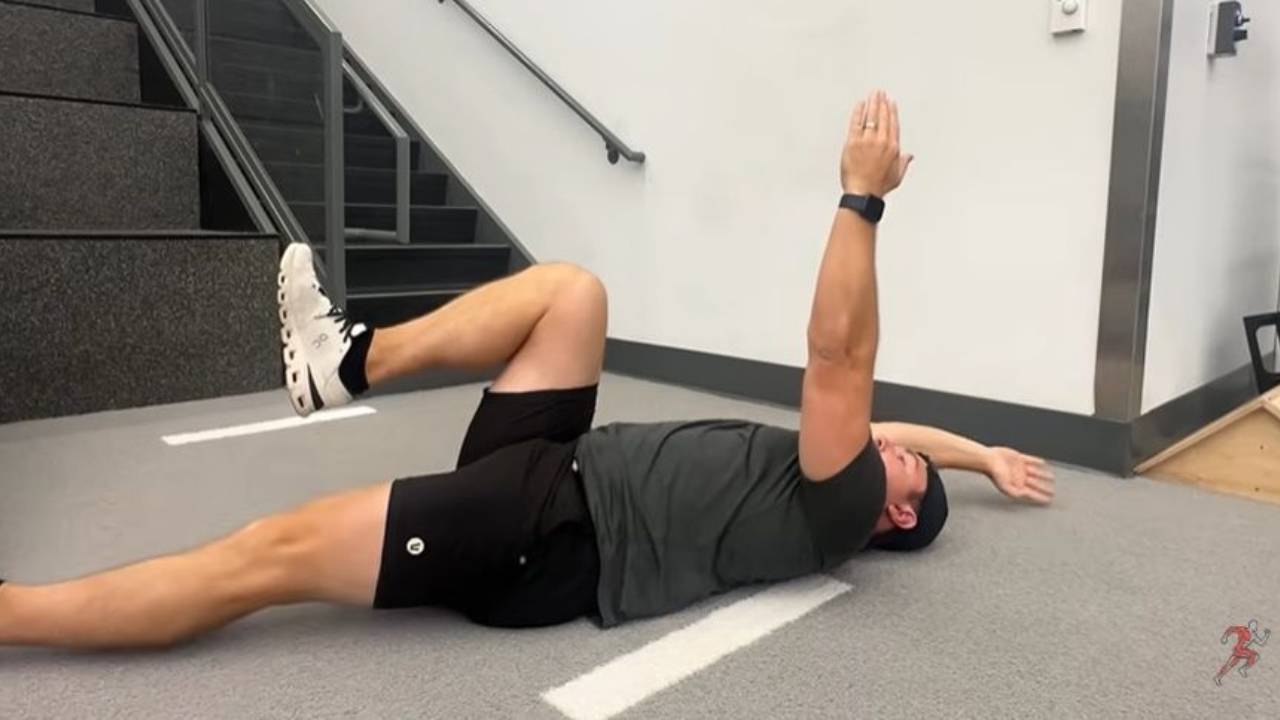
Lie on your back with the hips and knees flexed and the arms extended toward the ceiling.
Establish a controlled rib-cage and pelvic position. Slowly lower one arm overhead while extending the opposite leg away from the body.
Move only as far as you can while maintaining trunk position. Return to the starting position and repeat on the opposite side.
Coaching Cues
- Keep the rib cage controlled.
- Maintain your low-back and pelvic position.
- Move the opposite arm and leg together.
- Reach long rather than moving quickly.
- Exhale as the arm and leg move away.
- Stop the movement before trunk position is lost.
Common Errors
- Excessive lumbar extension.
- Allowing the ribs to flare.
- Losing pelvic position.
- Moving the extremities farther than can be controlled.
- Performing the repetitions too quickly.
- Holding the breath.
- Using momentum instead of controlled movement.
Common Clinical Uses
Trunk rehabilitation, spine rehabilitation, lumbopelvic motor-control training, abdominal strengthening, return-to-exercise progression, and preparation for more demanding trunk-stability exercises.
Programming
2–4 sets of 6–12 repetitions per side.
Range of motion and lever length should be adjusted according to the athlete’s ability to maintain trunk position.
Regression
Move only the arms or legs, shorten the lever arm, decrease extremity range of motion, or maintain a static tabletop position.
Progression
Increase arm and leg excursion, straighten the knee further, add resistance, incorporate bands or cable resistance, or progress to more demanding anti-extension exercises.
Equipment Needed
Bodyweight
Rehab Phase
Early
PRO+ Clinical Pearl
The goal is not maximal arm or leg excursion. The useful range ends when the athlete can no longer maintain rib-cage and pelvic control. Progress the lever arm only after the trunk can resist the increasing extension moment.
