
Chin Tuck Head Lift with Cervical Side Bending
Exercise Overview
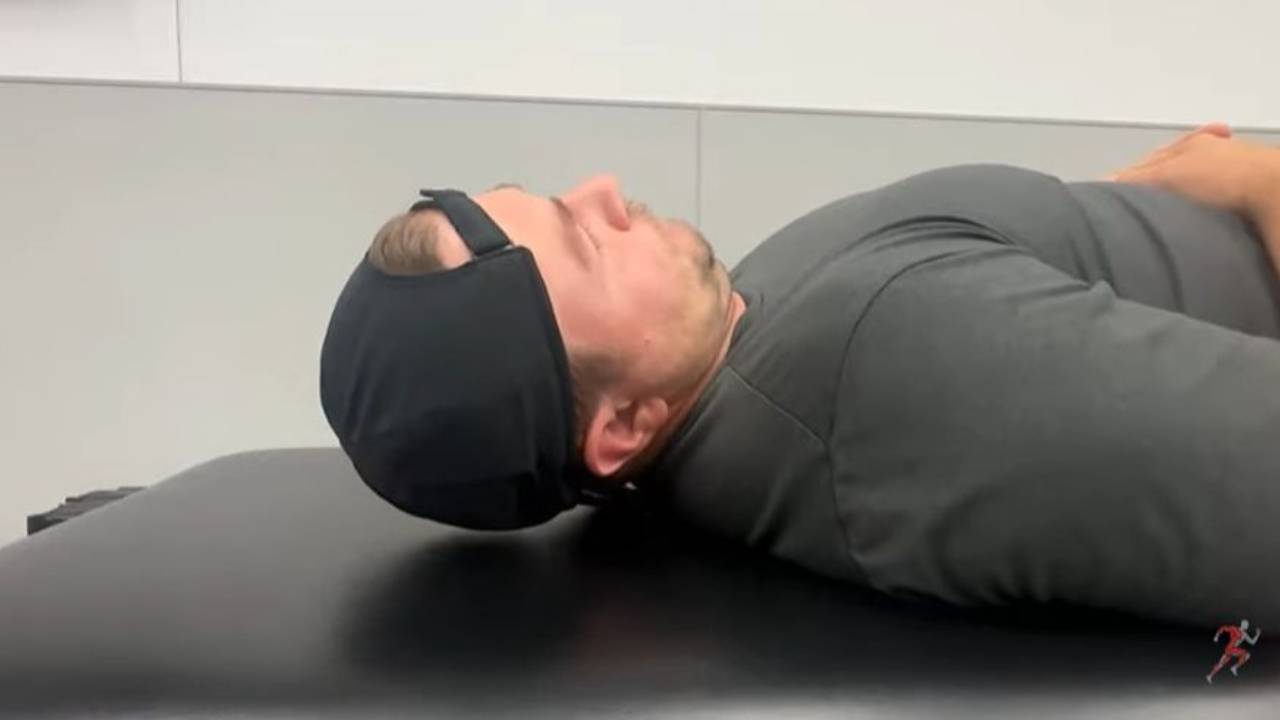
The chin tuck head lift with cervical side bending is a progression of the supine chin tuck that combines sustained deep neck flexor activation with controlled cervical lateral flexion.
Clinical Purpose
Used to improve deep neck flexor endurance, cervical motor control, and the ability to maintain head and neck position while introducing movement outside the sagittal plane.
Primary Muscles
Deep cervical flexors, including the longus colli and longus capitis.
Additional contribution from the cervical lateral flexors and other cervical stabilizers.
How to Perform
Lie on your back and perform a gentle chin tuck. Lift the head slightly from the surface while maintaining the chin-tuck position. Keeping the head elevated, slowly move the head into controlled cervical side bending toward one side and then the other.
Maintain the head lift and cervical position throughout the prescribed repetitions or duration.
Coaching Cues
- Establish the chin tuck before lifting.
- Keep the head only slightly off the surface.
- Maintain the chin-tuck position throughout.
- Move slowly from side to side.
- Keep the shoulders relaxed.
- Avoid rotating the head during the movement.
- Breathe normally throughout the exercise.
Common Errors
- Losing the chin tuck as the head moves.
- Lifting the head excessively high.
- Substituting cervical rotation for lateral flexion.
- Excessive activation of the sternocleidomastoid.
- Shrugging or tensing the shoulders.
- Moving too quickly to maintain control.
Common Clinical Uses
Cervical rehabilitation, deep neck flexor training, cervical motor-control progression, neck endurance training, and preparation for more advanced multiplanar cervical exercises.
Programming
2–4 sets of 5–10 controlled repetitions per side.
Alternatively, maintain the head-lift position for 10–30 seconds while performing slow alternating side bending as tolerated.
Regression
Return to a supine chin tuck without a head lift, perform the head lift without additional side bending, or reduce the range of lateral flexion.
Progression
Increase hold duration, increase repetitions, progress to larger controlled ranges of cervical side bending, or incorporate additional cervical rotation and multidirectional control tasks.
Equipment Needed
Bodyweight
Rehab Phase
Mid
PRO+ Clinical Pearl
The key challenge is maintaining the deep neck flexor position while another cervical motion is introduced. If the chin lifts, the head extends, or the movement turns into rotation, reduce the range and re-establish the chin tuck before progressing.
